

Walk with the customer when transforming their world
Our two key mindsets for winning customer trust in the world of mission critical software.
“Between the thin red line and the thin blue line lies the THINNEST gold line — the calm voice in the dark.” That’s the banner message of a word mural, painted in big white letters, covering one entire wall in the El Paso, Texas 911 center.
It speaks to the work of the unsung, unseen heroes involved in every emergency response — the 105,000 dispatchers who receive, manage, and steer every 911 call across America.
Known as “the calm in the chaos” when every second counts, they are experts at multitasking, de-escalation, and prioritization. I know because I’ve witnessed their incredible professionalism first-hand.
In the spring of 2021, I was a fly-on-the-wall of 911 and emergency operations on both day and night shifts. What I learned during weeks spent in the center led to a dramatic pivot in Prepared’s strategy, and radically shaped my perspective on how to build a product.
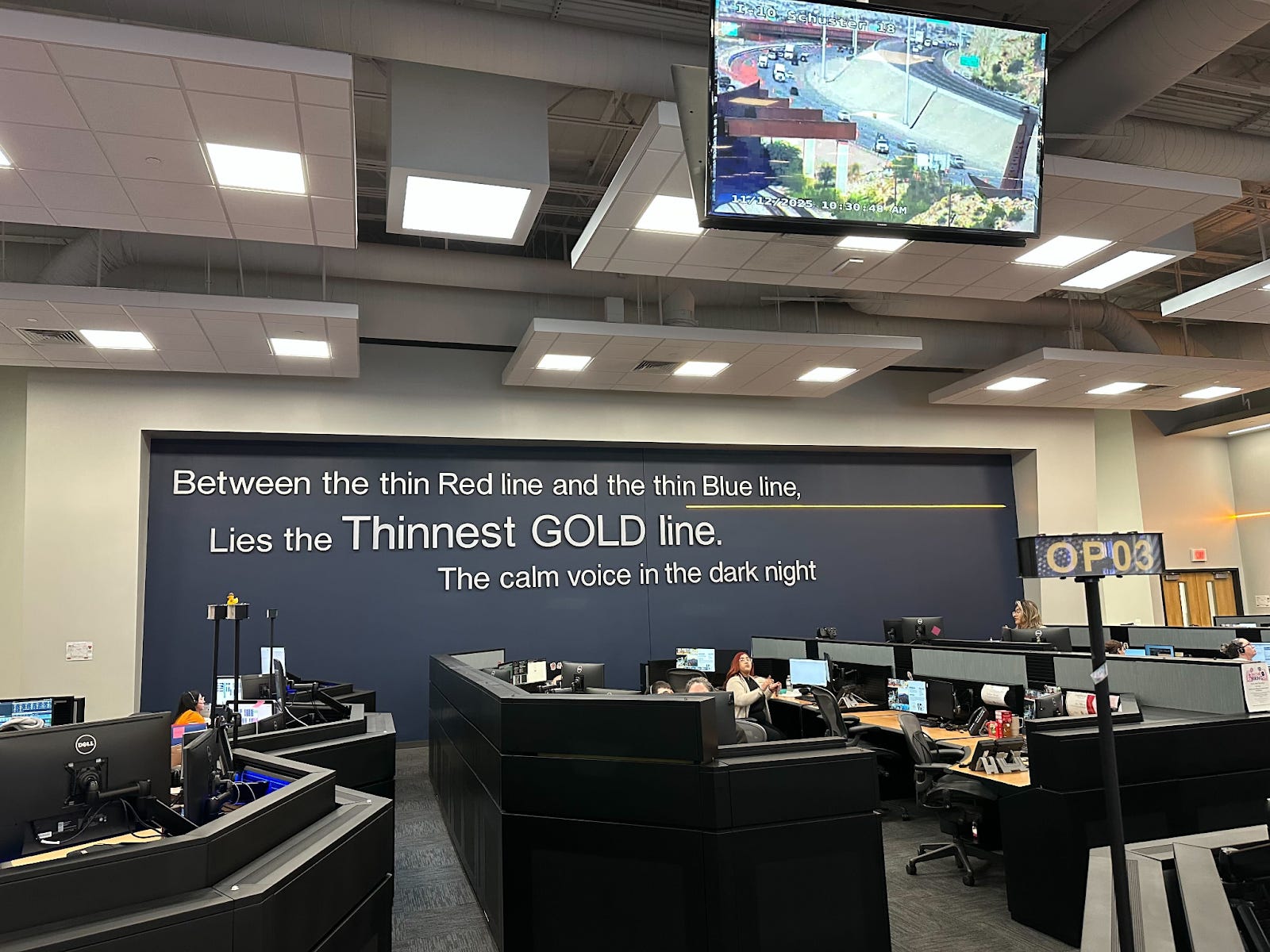
Mission control
I had expected a 911 call center to be like something out of a Mission Impossible movie. Advanced tech. Large video walls. High-resolution digital display monitors. Touchscreen interfaces. In my head, they had to have the best technology to be able to help people in their most critical moments!
But then my Hollywood expectations ran into reality.
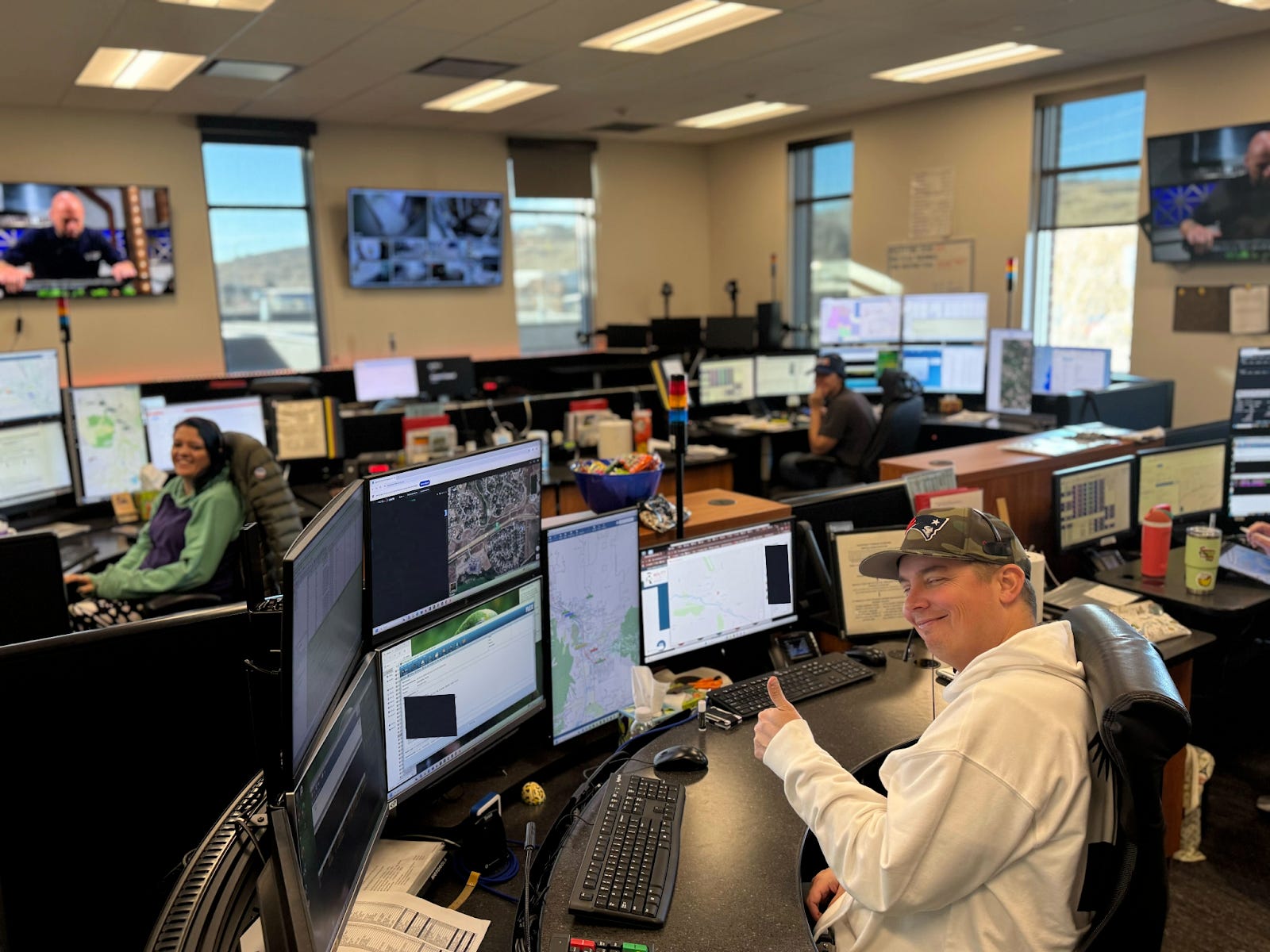
I was shocked at how outdated the systems were. A call-taker received a text message on one screen and then retyped that message, word for word, on another — unable to copy and paste between two computers.
Another call-taker flicked through a flipbook, trying to locate a certain protocol on a ‘trouble breathing’ call. At the same time, they were taking down details and asking questions about the emergency.
And then I noticed how the system didn’t actually tell dispatchers about the precise location of officers, just the general regions!
The very people who are Americans’ first line of help in every emergency were operating with outdated tools that didn’t meet the urgency of their work. More importantly, those tools didn’t seem to serve the best interests of dispatchers or callers.
Nothing was integrated, and everything felt clunky. I soon learned that when technology doesn’t solve a particular problem, they build workarounds. Everything was a workaround, built on a workaround, on top of a workaround. Layers of duct tape holding process together.
Even as emergencies became more complicated in recent decades, the systems in place didn’t change. So agencies were left to add new tools to solve new problems, leaving them with dozens of different, disjointed solutions that human operators had to correlate and connect.
Yet the dispatchers — headsets on, sitting in front of 8 screens — were unfazed, bringing everything together to deliver their best in an intense, fast-paced, high-pressure environment.
To them, “the system works just fine.” We were just students with zero understanding of how they worked.
But we understood the numbers: Every year, Americans make 240 million 911 calls. That’s 657,000 a day. And 80% come from mobile devices.
On that basis, more than half a million daily opportunities to share life-saving data were being lost. From our ‘naive’ first principles standpoint, it didn’t make sense to rely on an outdated system built for a world where calls came in from landlines only.
We had first spent time in call centers with the intent to improve emergency communications during school shootings, with an eye on developing our panic button app.
But those visits then led to a pivotal moment for Prepared, and it was one that forever changed the direction of the company: the development of our live-video-to-911 software.
It was in sitting with the dispatchers — our customer — that I discovered two approaches that were most effective in shaping our strategy.
Bring genuine curiosity
Be the contrarian.
By adopting these mindsets, and by taking the time to truly listen to the customer, we had breakthroughs that wouldn’t have otherwise happened. And we certainly wouldn’t have built the live video product that is now nationwide, providing coverage for 60 million Americans.
Bring Genuine Curiosity
No matter how many times I’ve traveled to sit with a customer, I’ve always come away with added clarity on Prepared’s vision and new ideas to shape our future.
It’s not enough for me to brainstorm ideas in a room, to whiteboard the problem being solved, or to compile a presentation based on theory. I leave the office. I have abandoned the Zoom interviews. I need to live their life a little.
Since 2021, I have sat with telecommunicators in around 75 emergency communication centers — at one point, I visited 40 in four months — and in the process worked with hundreds of directors, call takers, and dispatchers.
I knew that if I couldn’t be genuinely curious, I wouldn’t be able to win them over. Without this level of attentiveness, sitting with the customer is ineffective.
To me, ‘Genuine curiosity’ is about asking questions that you have no reason to ask. It moves the focus away from the product and instead takes the time to truly understand the customer, their process, their life, and their thinking.
I’ll never forget when I was chatting with a dispatcher about panic buttons and school shootings, and she said: “That kind of emergency in a school happens once in a blue moon but every day in the city.”
I had just watched her field a rush of calls about a house fire, and noticed three things: a) she strained to hear what a hysterical caller was saying; b) she struggled to obtain an accurate description of how big the blaze was, and c) she could not get a precise location of the caller.
In between those calls, she turned to me and said: “Now, if you could tell me where this person is, that’d be helpful!”
It was a throwaway remark — she certainly wasn’t thinking about software — but it was a defining moment that opened our eyes to a wider problem, requiring us to build an entirely new solution.
That was the unlock to Prepared’s success.
We thought: What if we could ‘upgrade’ 911 calls to be more than just ‘audio’? What if we turned a caller’s cell into a video feed to give dispatchers eyes and ears on the ground — just like a Facetime call.
But still, even with the development of that new product, dispatchers pushed back.
Their goal, they explained, is to get callers off the phone as fast as possible to be able to take the next emergency. Adding another step and more software would make the call longer.
It seemed obvious to us that being able to see would make it easier to assess the emergency, making the call faster. But their resistance to change proved stronger than the logic we presented.
And so began six months of pain, attempting to get agencies to use live video to 911.
Our first strategy: If we sit with them, they’ll have to use it right?
No. They didn’t. Their pre-existing habits persisted.
To change their behavior, we had to truly understand where they were coming from, and map our contrarian vision of the world to theirs.
Be the contrarian
I’ve found that changing minds is best done in person. But being a contrarian is uncomfortable.
From my experience, truly great ideas are rarely accepted without resistance. It has required poking holes and prodding into someone’s world, someone’s way of working, and even someone’s identity.
But as our co-founder Michael Chime says: “Sometimes, you have to go against the customer.”
As I poked holes in a calltaker’s workflows, asking “Wouldn’t it be better if you could see the caller’s video?”, the same answer nearly always came back: “That would not help… I’m doing it just fine right now. This is just how it’s done.”
My takeaway is that humans can tolerate pain (and clunky technology) if that pain is familiar. People don’t like change, even if it’s in their best interests.
During my initial visits, I learned the root resistance to our live-video technology lay in the uncomfortable truth that upgrading technology would essentially mean admitting that old systems may have cost lives. That’s a tough realization to digest.
Despite the consistent ‘no’s and inaction, we disagreed and we were persistent with our belief in our product. Because we knew it would save lives if we could scale it nationwide.
We pressed on. We asked unconventional questions, proposed disruptive ideas, and challenged industry traditions. We were persistent with our belief in our product.
And that’s when, in August 2021, one man’s life was saved thanks to the intervention of a video call. For the call centers, seeing was believing.
Five years later, hundreds of folks are alive today that might not be because of our live-video-to-911 solution.
I sometimes imagine if our curiosity had been limited to just connecting ‘panic buttons’ to 911! We would never have had the conversation that led to the breakthrough that led to the live-video-to-911 idea.
In walking with the customer, it allowed us to transform their world — and live video, as it turns out, was just the start.
We’ve continued to bring genuine curiosity to onsite visits, and we’ve doubled down — every Prepared employee is expected to visit a 911 center shortly after joining the team.
These visits, and these mindsets, have resulted in a dozen new product lines over the last few years. And I like to think that we’ve played our part in dragging emergency response technology into the modern era.