

The audacity to find a way
Reflections on navigating through hard obstacles — and refusing to quit.

There were so many times during this whirlwind journey with Prepared when we felt completely demoralized and demotivated. Times when we thought we had tried everything, but absolutely nothing worked.
And yet, I never really gave up. Nor did the rest of our team. Our do-or-die instincts kicked in, and we kept looking for another way. Over time, the ways we managed to solve these problems and overcome our toughest obstacles — our tenacity — shaped and defined our identity.
Without it, Prepared wouldn’t be here today.
I want to highlight three of these moments from the earliest parts of Prepared’s history:
[Pre-funding] The Uber that led to our first institutional investor.
[Seed] Chasing police around town to land our first 911 center customer.
[Series A] Creating “Most Wanted”-style posters to win over Apple.
[Pre-Funding] Shooting Your Shot
People often talk about success as a result of “luck” — being in the right place at the right time.
I partially agree. I think life can put you in opportune situations, but you still have to be the one to shoot your shot, as Michael, Dylan, and I found out when we were still students at Yale.
At the time, we had dozens of schools signed up, waiting to go live with our first product: a panic button for school shootings.
But we didn’t have the staff to support this demand, especially after two accelerator programs had already handed us rejections (we got rejected by YC!). We couldn’t get a “yes” from any investors, leaving us with just $30,000 in the bank.
Then, our Yale School of Management class booked Karl Alamor, managing partner at VC firm M13, to talk about his early days at cloud infrastructure provider Digital Ocean. With two decades of experience building businesses, he was exactly the type of tech investor and advisor we needed.
At the end of his presentation, our professor asked if anyone wanted to walk our guest speaker to his Uber. My co-founder and Prepared CEO Michael seized the moment. On the walk to the car, he pitched Karl the app we had built, and our mission to end school shootings.
Karl was hesitant. But he at least gave Michael his number and said: “Come back in six months when you’ve solved these four things.”
Those four things were:
Proving the fundamentals of the underlying business model.
Finding an edge to get massive distribution.
Understanding the larger vision beyond “schools.”
Why we were the right founders for the space.
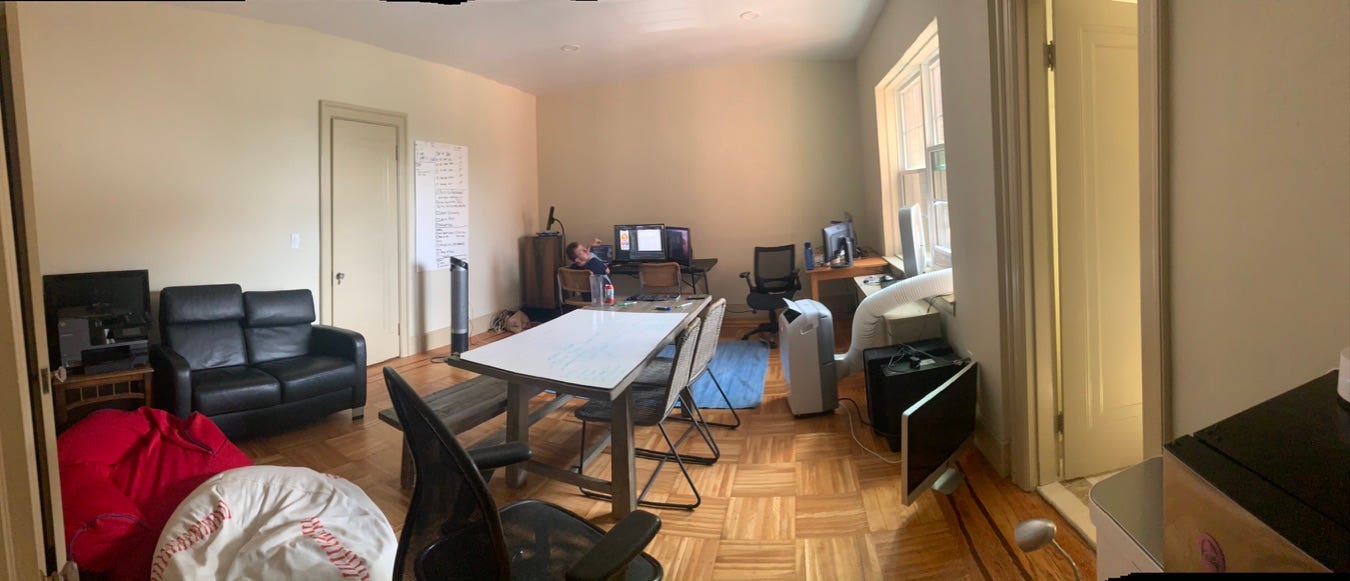
We didn’t wait six months. Michael, our other co-founder Dylan, and I worked our asses off in the apartment we shared, and we got answers to him in three weeks. And that’s how Karl became our first institutional investor — the anchor to our first $1.8m pre-seed round.
We were “lucky” to be in that Yale class. We were “lucky” that a high-caliber VC came in that day. And we were “lucky” that the professor asked for someone to chaperone Karl to the Uber.
But the key difference was that we manufactured our own luck. Michael recognized who and what was placed in front of him… and shot his shot.
[Seed] The Prepared Police Chase
The first schools went live with our product, but they requested that we build a direct connection between the Prepared school safety app and the heart of emergency response, the 911 center. We also knew how crucial this connection would be, because it meant Police/Fire/EMS could be notified immediately in the event of a school shooting.
We tried everything to make it happen, cold calling and emailing dozens of 911 directors. Naively, we figured that since we were already in schools, improving school safety, the 911 centers would automatically work with us — this made logical sense. That was not the case. We heard nothing in response.
“Why is no one responding to us?” After three weeks of radio silence, Michael was fed up with inaction. “F*** this,” I remember him saying. “I’m borrowing your car, Neal!”
He drove around New Haven, CT, with one mission in mind: to find a cop who’d introduce him to the police chief, with hopes that the chief would introduce us to the city’s 911 director.
You might have already guessed that Michael is the headstrong type who fights for every inch. Sure enough, by the end of the day, he flagged down a cooperative officer who he pitched in the street. “I’ll speak with the chief,” said the cop. Two days later, Michael was pitching the chief … and we had our introduction to the 911 center.
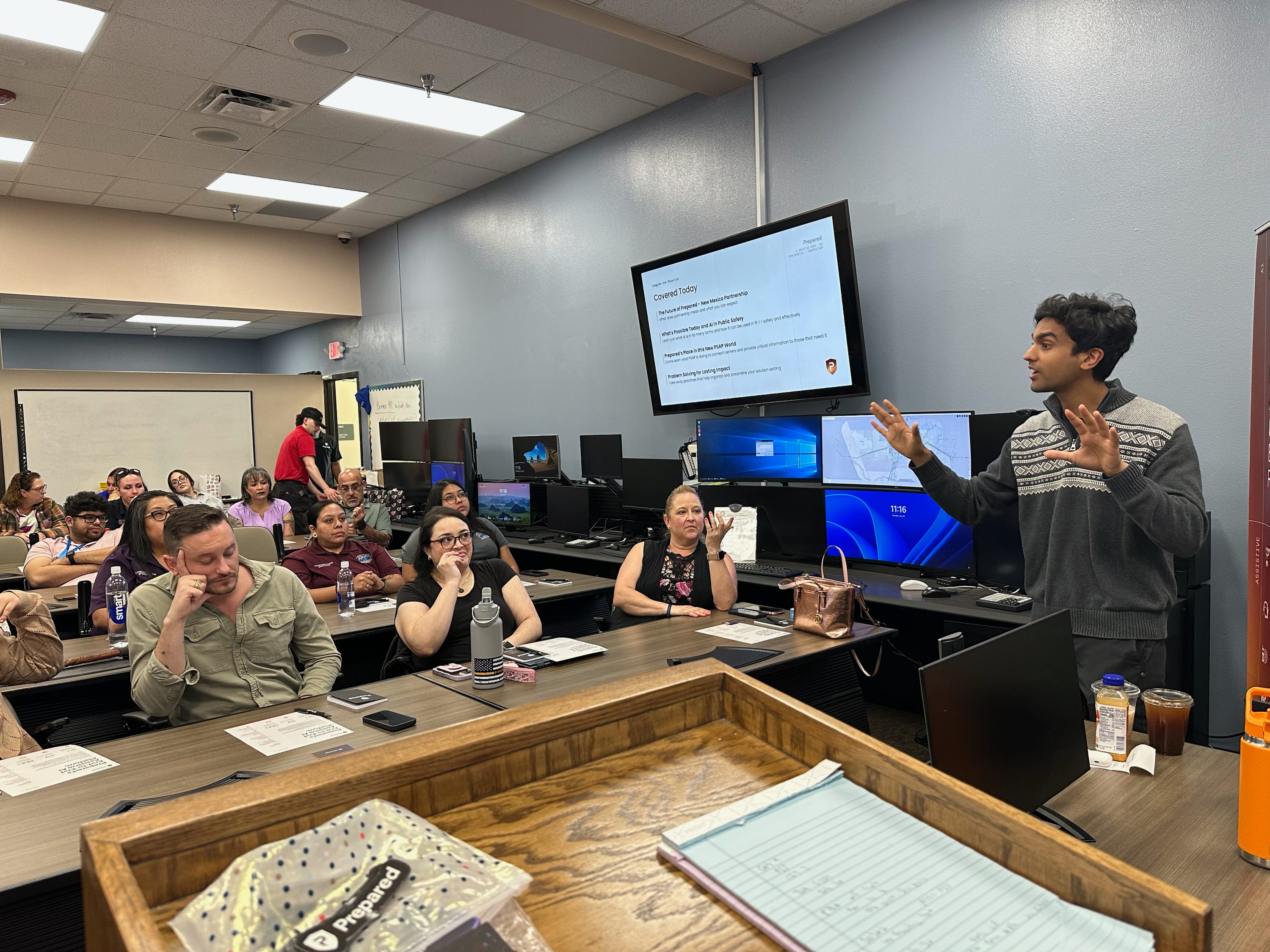
Before we knew it, we were sitting alongside the dispatchers in New Haven, which, in turn, led to the creation of our blockbuster live-video-to-911 application — Prepared Live.
All because Michael refused to accept a reality where our app compromised safety. Saving lives was what mattered most, and if getting an “in” with 911 centers made the difference, he knew he had no choice but to make it happen.
[Series A] Winning over Apple
We proved that live-video-to-911 saved lives with several of our first customers. Despite this, we were finding it exceptionally hard to convince agencies to use it consistently throughout every life–or-death situation.
One big reason was that the live video process was still too slow — “going live” took upwards of two minutes using SMS:

During one critical robbery-in-progress, it took 2 mins 40 secs. When every second counts, that’s far too long. We urgently needed the user experience to be faster and more seamless.
The solution? Removing the link all together and making it work like ‘facetime’:
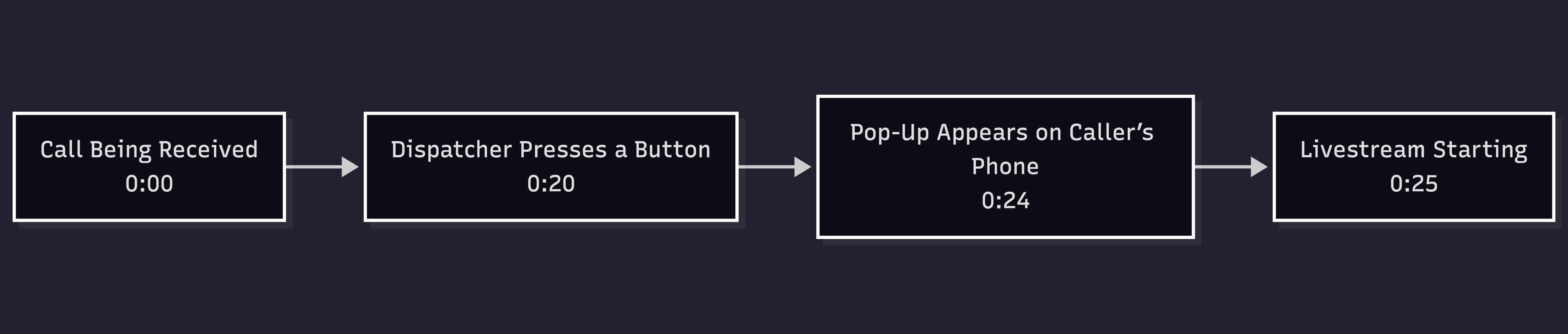
When we simulated this one-click sequence on our phones, it only took 25 seconds!
To go live with this upgrade, we needed Apple to integrate our software into iPhones as a native feature. Which felt like a pipe-dream. Until I met the man who could make it happen.
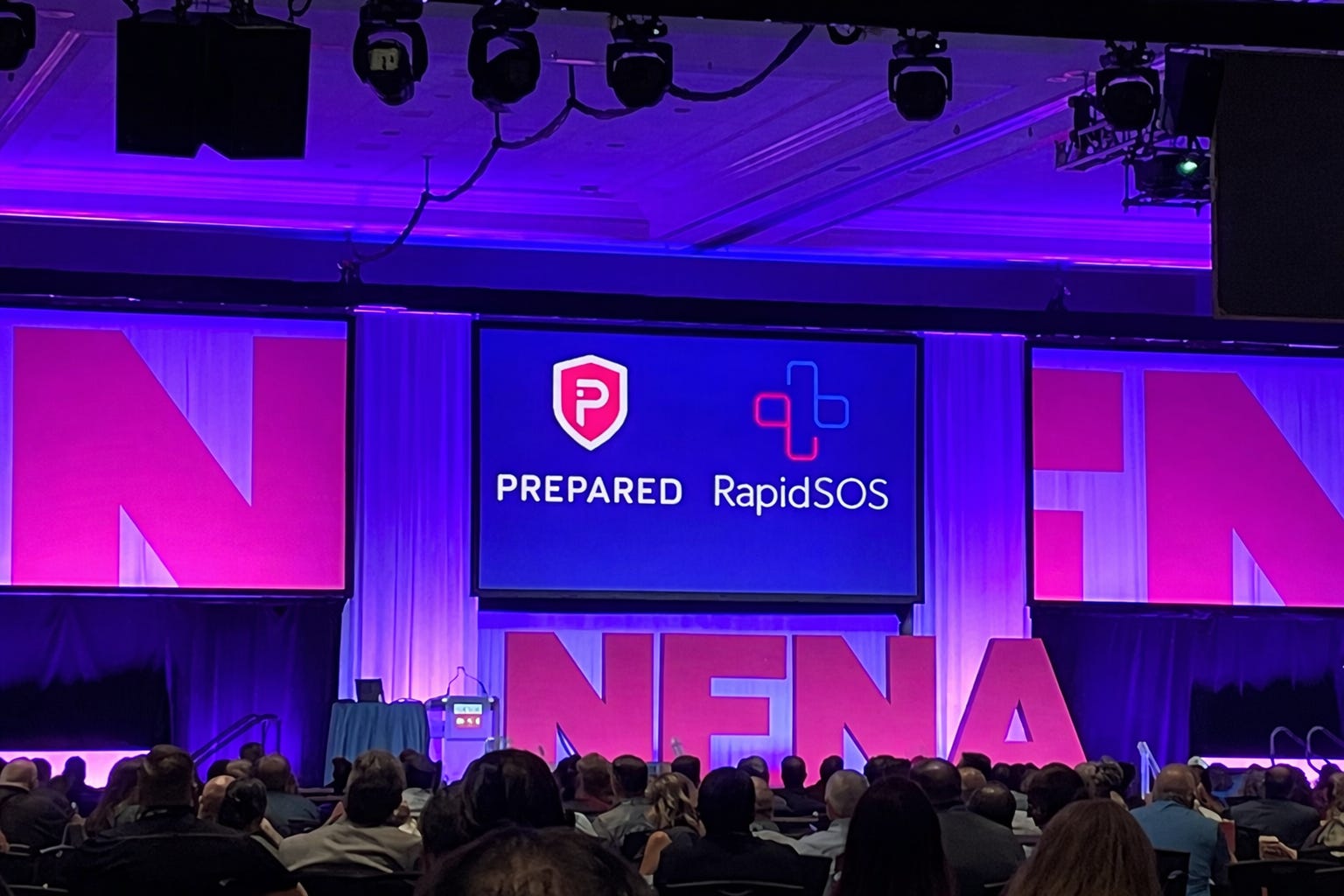
Let’s call him “Jay.” He oversaw emergency services integrations at Apple, and I had first spoken with him in 2022 at the NENA (National Emergency Number Association) Conference, the biggest industry event of the year, in Grapevine, TX.
Back then, he didn’t bite. Why would he? We were a tiny 15-person startup with only 30 dispatch centers as clients. But I persevered. I tracked down his business card and found his email address. I sent him emails requesting a meeting. No response.
When our live-video-to-911 software was used to save a life in a novel way, I sent him an update email. No response. For an entire year.
It got me thinking: How do I initiate contact with Jay? It was time to manufacture my own luck.
Here’s what I knew: Jay always showed up at the NENA Conference. So I returned to Texas in 2023 as a man on a mission.
On day one, I found his LinkedIn profile, screenshotted his photo, and shared it like a “Most Wanted” poster to our sales team’s Slack. “If you see this face,” I told everyone during our morning huddle, “Don’t let him out of your sight.”
Operation Apple was in motion. A few hours later, a sales rep named Luke located our man at a competitor’s booth. I sprinted to insert myself in front of him at a competitor’s booth!
To my surprise, Jay couldn’t have been more receptive. “I know Prepared,” he said. “You’re the guys making waves with live video.”
Maybe he had been reading my emails after all…
“We could save so many more lives, with Apple’s help,” I said. I pitched him on the spot … and that proved to be our breakthrough — Jay saw the opportunity to improve safety for all iPhone users, and he agreed to work with us.
Fast-forward a year and we launched the native video interface as the keynote at NENA 2024. To the surprise of every other vendor, our small startup was name-dropped by Jay at the Apple keynote. And then Emergency SOS Live Video was featured at the next iPhone launch — Apple’s crown jewel marketing event.
A similar story occurred with Google, too. At first, they laughed at our pitch. Insiders described us as “kids.” They told us native live-video-to-911 on Android would never happen. “The ecosystem is too fragmented”. But we kept knocking on their door.
In December 2025, Prepared’s Live video was officially integrated as a single-click upgrade on all Android phones.
Creating change in these massive companies seemed insurmountable at one point. We stuck to our vision, our belief in live-video-to-911 to be the future of emergency response. We knew it was a question of when it would happen, not if it would happen, and that’s what made the difference.
Hire High Agency
The figure-it-out-and-find-a-way mindset has become a company-wide standard.
It’s not exclusive to me and my co-founders — we’ve made it clear across all teams that everyone needs to think outside of the box and show personal agency.
To this day, our teams present me with “impossible” situations. But I’ve seen that when we identify the right people for those tasks, they still get it done. Recently, we slashed a $100,000 implementation cost from one of our products, simply because someone created a new solution to bypass a VERY large, long-standing brick wall.
High-agency hires lead to a team that brings this mindset every single day, to every single burning fire. I need to know that every conceivable creative avenue has been explored before anyone waves a white flag or any product lines are abandoned. Failure, in this environment, is a feature, not a bug.
Ingrain this sense of resilience into your culture, and you will create generational impact.
Disclaimer: The views expressed here are my own and do not reflect the official stance or policies of Prepared or Axon. While I have drawn from my experiences working in public safety and emergency response, these personal opinions, based on my own journey, are intended to spark conversation and reflection.
A powerful reminder that progress usually comes from high-agency persistence, not perfect conditions
This post should be titled "The audacity to find a way to congratulate myself again".
Make no mistake: this company's success is in spite of your work, not because of it. Your world-class narcissism is only eclipsed by your ability to completely tank a team's morale.