

Building a truly impactful founding team
How a group of novices shaped the company we would become.

“What made Prepared work in the early days?”
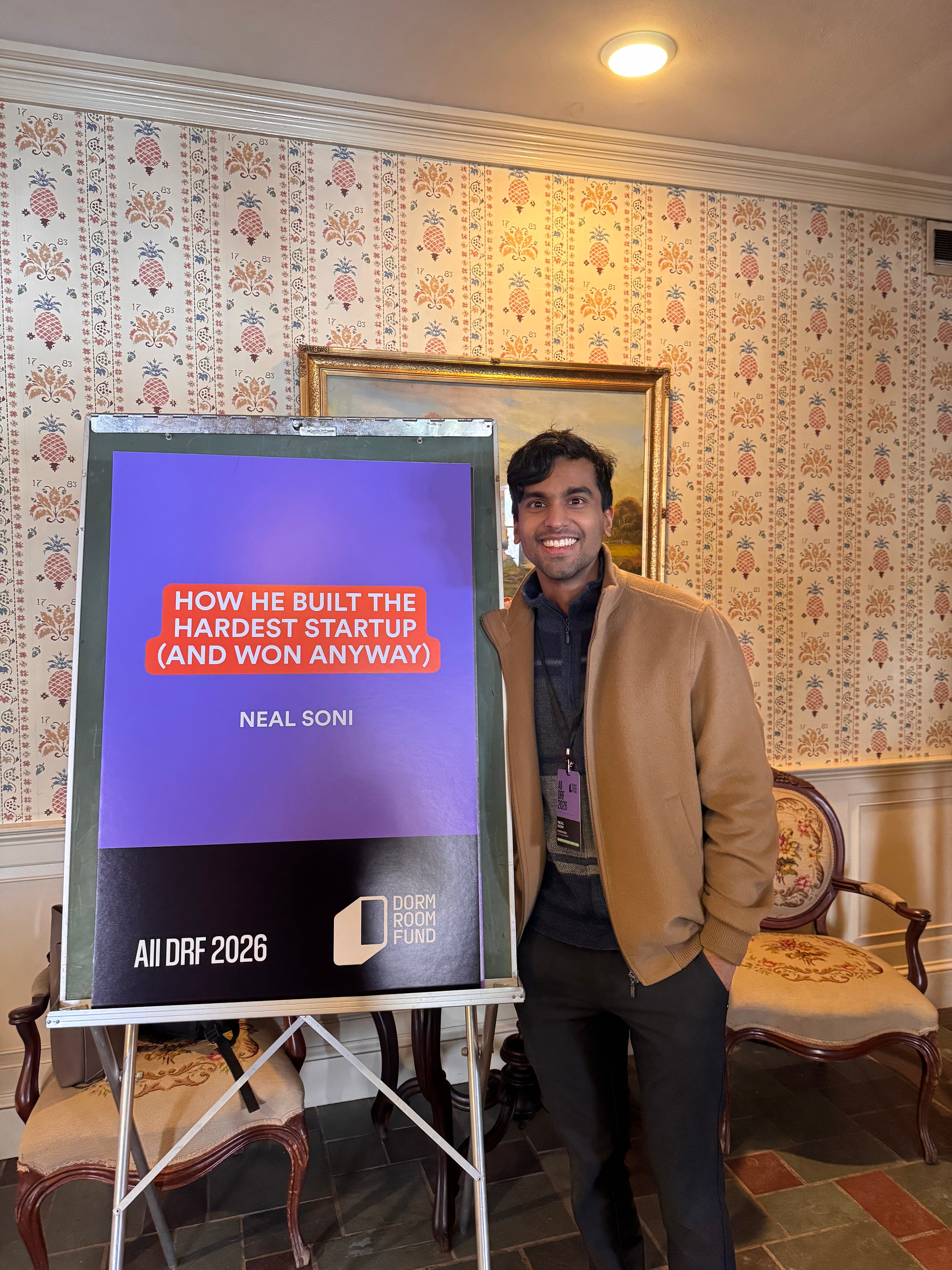
That’s the question I was asked at the Dorm Room Venture Capital Fund yearly retreat. In the room, there were 30 entrepreneurial student investors and founders, and most of them already knew the polished version of Prepared’s story — the acquisition, the product success, the media coverage.
But the students and founders weren’t interested in the “official” story. What they really wanted to know about was the unvarnished truth of the early days. What worked, what didn’t, and how we pulled it all together.
I understood that curiosity. In the early days, we also dove into the ‘self-help’, ‘tech bro’ books and watched all the YC YouTube videos. We wanted to apply all the advice we could find, because we didn’t have any prior ‘lived experience’ to lean on.
In retrospect, many of the outside frameworks we tried to apply did not work. As it turns out, no one had ever tried to change public safety response the way we wanted.
So when I’m asked about what made Prepared work in the early days, my take is that much of the success of Prepared came from the composition of the founding team — and in part due to that team’s complete lack of experience.
The synergy of inexperience
Michael Chime, Dylan Gleicher, and I started Prepared as Yale students who didn’t know anything about how to run a business. What we lacked in experience and expertise, we made up for in man hours and sheer effort.
Michael led the way. He has incredible leadership skills and the kind of charm that gets people to say yes. He met with principals every day, sought out students from different states and counties, and was constantly in and out of meetings with customers, fully determined to fulfill their needs. He relayed customer demands to Dylan and I, which dictated our task prioritization on getting it built.
This style of reacting purely to customer feedback made it really easy to put our heads down and go, go, go. Part of it, I think, was that we knew our customers saw us as inexperienced, young college students. If we couldn’t deliver, they would have no problem dropping us.
So we didn’t let ourselves get distracted with traditional long-term planning; we didn’t have time. We needed to make real, tangible progress on the product to serve the customer.
It helped that Michael was a former D1 football player. Michael was our captain, and we ‘practiced’ whenever we could for our ‘games’ — going live with schools. We were a team. Like true athletes, we even took all the same classes so that we could split the work.
Two months into the COVID-19 pandemic, we hired other employees for the first time. Most college students were stuck at home, looking for things to do, so we scraped the Yale and MIT student directories and sent out mass emails: “Hey, we’re hiring interns who want to build software to save lives.”
We hired ten interns. On paper, they were all impressive — super smart, flawless resumes. We gave them real ownership over projects and mostly stayed out of the way, partly because we didn’t really know what “traditional management” was supposed to look like. It became a sink-or-swim environment almost by accident.
Eight interns sank. Two didn’t just swim — they cut through the water. Srikar and Miranda stood out immediately. When they reached hurdles, they didn’t wait for Michael, Dylan, or me to walk them through the problem. They pushed forward, found their own way, made mistakes, owned them, and kept getting better — even without feedback.
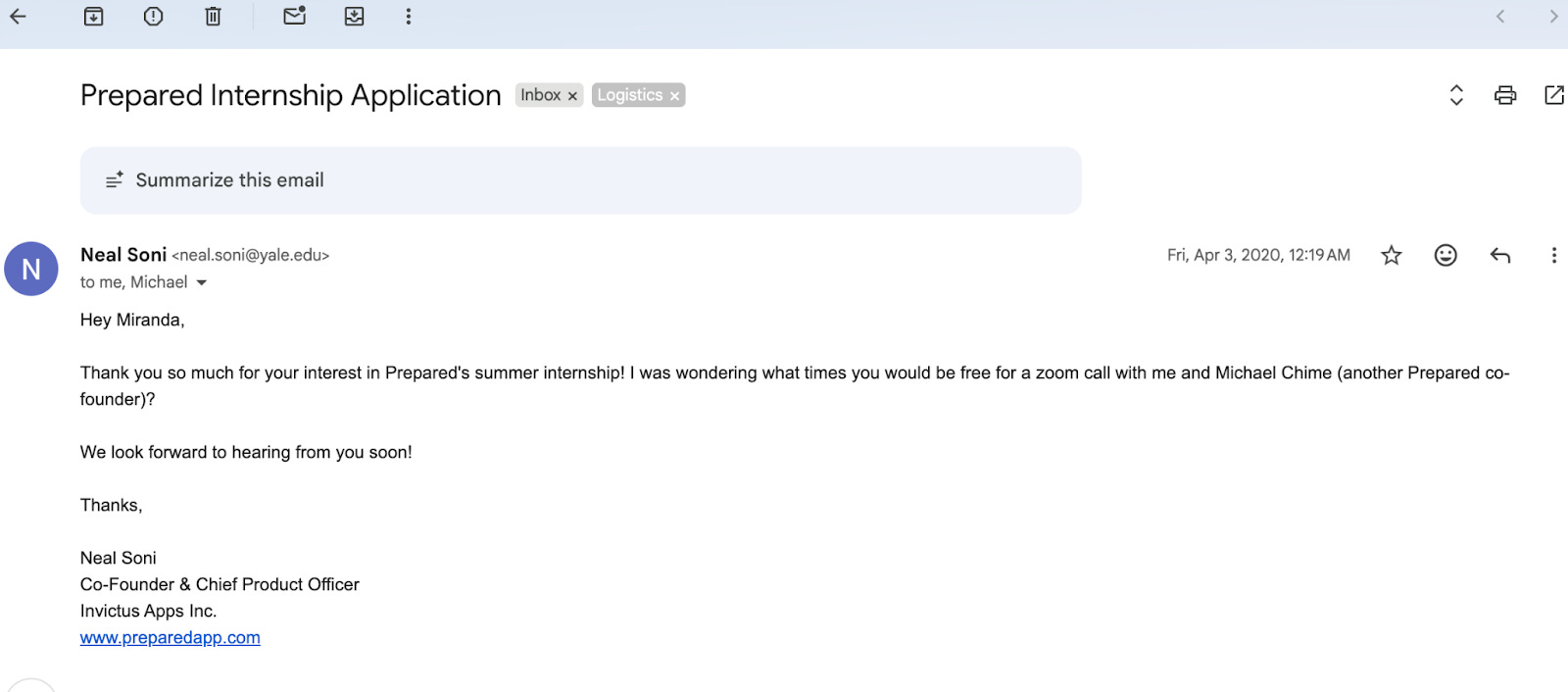
Startup advice we often heard at the time was: “The best indicator that someone will do well in a job is whether they’ve done that exact job before.” Yet Miranda and Srikar had never worked anywhere before. They were just college students, like us. Within weeks, they were designing our product and onboarding customers completely autonomously.
This has been a key lesson for me: don’t over-intellectualize the hiring process. Over our history, we had often underweighted high slope growth and overweighted experience.
The synergy of being together
The question of bringing Miranda and Srikar on full-time had nothing to do with what their position would be or how their skills would fit into the company structure. Instead, we rented a six-bed apartment in New Haven, convinced Miranda’s parents to let her drop out of UChicago1, and got them both to move in with us.
We turned the sixth bedroom into a makeshift office, put whiteboards for every corner, and used a ping-pong table as our dining table. It sounds ridiculous, but none of us cared about formality anyway. We had what we needed.
We worked together, cooked together, socialized together, and worked out together. Inevitably, we made mistakes together, grew together, and triumphed together. At that point, of course we would run through walls for each other.
Everyone acted like a founder, treating Prepared like their own company. Nobody was just along for the ride. Each individual took initiative and went above and beyond what was “required”. This was also true for Alex and Chris, founding engineers who worked remotely from Chicago and SF.
There’s a saying that launching a startup is like “building the plane as you’re flying it.” For us, it was more “learning how to build the plane, then building it, while already flying it.”
I remember Miranda saying, “This place is going to run like a real company!” And then, she figured out how to build a company operating system from scratch, relying purely on her own research and raw organizational skills, for our logistics, finances, hiring, and onboarding.
It helped enormously that people naturally fell into the right positions: Miranda owned design and operations, Alex owned frontend, Dylan and Chris owned backend and infra, Chime on go-to-market and vision, I oversaw the product, and Srikar filled in all the gaps found along the way.
But our synergy came first, and from there, everything else flowed: a collaborative spirit, deep trust, shared values, an iron discipline, and clear ownership. Our work ethic and cohesiveness meant we outworked everyone and anyone. Mistakes, learning, our growth, building the right product — it was all fast-tracked.
Fast-track learnings
If you work 40 hours a week in a normal environment, clocking in and out, attending meetings here and there, you’ll probably achieve 20, maybe 30 hours of deep work. But our work and home life merged into one, meaning we crunched 70-80 hours a week (including Saturdays and Sundays), and our entire mental capacity was laser-focused on the mission with no outside obligations or ‘distractions’. As a result, we probably achieved something like 60 hours of deep work a week.
I’m not saying that this is healthy or worth replicating, but that was the reality of our situation: a non-stop, 24/7 reality. In two years, through our wins and mistakes, we learned what might normally take five!
I’ll end with a story from when we were in talks with a hospital in New Jersey. Their emergency operations center was interested in our original panic button app for schools. They wanted to see how it worked, and whether it could monitor threats across a massive hospital campus.
There was just one small problem: that version of our app didn’t exist. So we built it.
For two weeks, all hands were on deck building a new version of our product, complete with a desktop app experience that could track activity across different floors and wings — features that hadn’t existed before.
We finished at 2 am the same morning we were scheduled to visit the hospital. After submitting it to the App Store for emergency approval, we drove three hours, arrived around 9 am, and immediately began training the staff.
It was insane. After a single onboarding session with everyone crammed in one room, we locked down the hospital. Someone walked around the entire campus in a vest to simulate an active shooter, and our product worked near perfectly2.
This hospital story captures how our founding team always found a way to overcome problems that came in our way – we simply didn’t know any other way. We pushed one another to take every idea as far as we could, executing until we built a product that reached escape velocity. We weren’t afraid to fail, pick each other back up, and learn from it.
Our incredible rate of progress — our early ‘success’ — resulted from the loyalty, closeness, and grit of this founding team. It didn’t come from structure or any traditional business model. We bonded as people first.
Hardest part of building Prepared?
Even though this was a massive success with potential for further product direction, around that same time our live-video-to-911 software saved a life in a novel way. We chose that direction instead, and never looked back.
I work with this guy and it's no secret at the company that he's absolutely insufferable. It doesn't surprise me that his blog is just as vapid as he comes off in person.